Blockchains and responsible business

Contracts, transaction and their record form the foundation of our economic, legal and political systems. They help protect assets and set boundaries of an organisation. They are critical to establishing the and verifying identities and chronicling events. They govern interactions among organisations, communities, and individuals. And, they guide managerial and social action. The digital transformation sweeping the world has meant that it has become impossible to keep a good track of the contracts, transactions and their records. Here is where blockchain comes in.

So, what is blockchain? The blockchain (or distributed ledger) is the technology that powers the digital currency bitcoin. It is an open, distributed ledger that can record transactions between two parties in an efficient and verifiable manner. One can imagine blockchain as a giant spreadsheet that runs on millions of computers. The blockchain is distributed, open source and everyone can see what is going on.

In the blockchain world contracts are embedded in the digital code. This code is stored in transparent, shared databases where they are protected from deletion, revision, and tampering. In this world, every agreement, every process and every transaction has a digital record and signature that can be identified, validated, stored, and shared. Futurists anticipate that the need for intermediaries like lawyers and bankers is likely to disappear. Transactions are likely to become frictionless.

There are many new uses for blockchain that are emerging almost every day. This new way of transacting could support business responsibility in many ways by supporting green supply chains, measuring water use, emissions management and supporting the sharing economy.

1. Green supply chains: Suppose a farm field is certified as organic. This certification enters the blockchain as a contract. When the produce is moved to another intermediary, the contract containing details of the produce is passed on to the intermediary. This link continues till the food item or a product manufactured out of it reaches the customer. The customer can have a complete record of all the ingredients in the product providing assurance that the product contains what it is supposed to.

2. Water management: Companies draw water from local sources for their operations. Water withdrawal can be recorded on distributed ledgers. Water additions and withdrawals can then be tracked at different places within the factory premises using smart meters. This recording could enable companies to track their water usage efficiently and effectively.

3. Emissions: Companies that generate fossil CO2 could deposit a specified amount for every tonne generated in the blockchain ledger. The deposited funds could be held in escrow. The funds would remain in the escrow account till they are redeemed by a party anywhere else in the world who successfully segregates a ton of CO2. Reforestation or industrial CCS (carbon capture and sequestration) are the primary means of achieving sequestering. In this system, every ton of CO2 emission is individually accounted. Financial incentives would be created to isolate the CO2 in a safe manner. After all the accounts are balanced then zero net emissions of CO2 would have been achieved.

4. Sharing economy: The sharing economy reduces resource wastage and minimises recycling. Much of the sharing economy, today, is characterised by large centralised organisations that enable aggregation. The blockchain technology could provide a disaggregated peer-to- peer system that could eliminate the need for physical offices and assets. This would enable these platforms in a different way, by ensuring that buyers and sellers could interact directly with one another, without passing through any centralised middleman. Buying and selling contracts would then be fulfilled through transactions recorded through the blockchain technology.

5. Smart villages: Smart Villages typically run on a microgrid powered by renewable energy. The microgrid needs to allocate electricity efficiently. Smart metering coupled with blockchain ledger recording can help immensely. The power demand at home would be recorded and the demand matched against the supply that is available. The matching mechanism would provide for an efficient resource allocation. This system is in fact being piloted in several parts of the world.

6. CSR spending: Companies in India are mandatorily required to spend 2% of their average net profits on CSR. Thus the 2% spend by corporations becomes a contract between the government and the company that needs to be executed. Rather than the opaque systems that exist today, we could have information on every activity undertaken by the company made available to all. The activities can be tracked and authenticated.

Blockchains are here to stay. It is incumbent upon companies to use the technology smartly to reap the many benefits of – secure transactions, faster dissemination, equal availability of information, and help companies adopt responsible stewardship.
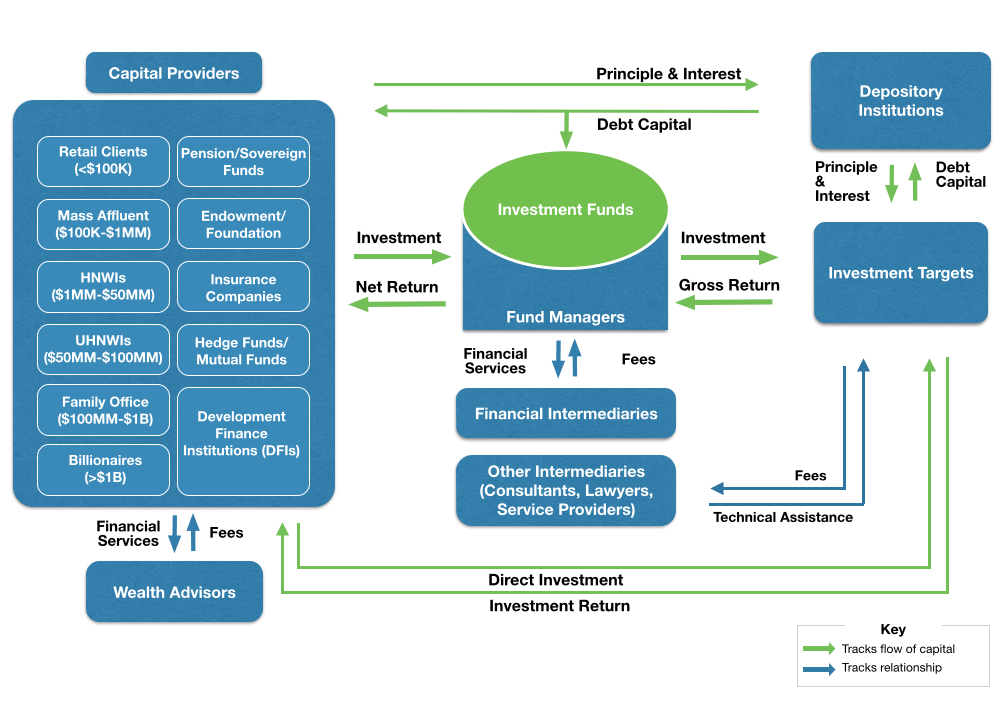
ABB uses smart tech to solve humanity’s most pressing challenges

Carbon emissions are a significant cause of worry for India and the world. To solve this we need renewable energy. But, that’s not all, significant savings in emissions can be achieved with the help of energy efficiency. ABB is an interesting company because 57% of its product portfolio is based on renewable energy and energy efficiency products. According to ABB advanced technologies enabling the Fourth Industrial Revolution are our best hope of addressing the climate emergency.

ABB is an engineering and technology company that drives the digital transformation of industries. This 130+ year old company operates in more than 100 countries with about 110,000 employees across the globe. ABB has been present in India for over a century and is a listed company with multiple manufacturing locations, global feeder factories and development & engineering centers. ABB has four businesses, Electrification, Industrial Automation, Motion, and Robotics & Discrete Automation. The company believes that for it to lead transformation in the 4th industrial revolution it needs to build a strong foundation based on Health, Safety, Integrity and Sustainability.

According to Sanjeev Sharma, CEO and MD ABB India, “Sustainability is not something extraneous and only aligned to current thinking but , it is core to our business for decades. We first focus on things that we can do to reduce our carbon footprint, then we focus on products and services that can help others.” He says, “In India we use up to 30% more energy to produce one unit of anything across sectors. Hence the first step companies need to take is to improve energy efficiency at every level. Changing to energy efficient motors for instance can increase cost savings between 20-30%. Our approach to reducing energy usage is increasing efficiency, making product elements more environment friendly and using digitalization. In addition, ABB has also developed high and medium-voltage switchgear with AirPlus™ technology, which is a ground-breaking eco-efficient gas mixture with 99.99% lower global warming potential (GWP).”

The energy portfolio of ABB therefore focuses on Smart cities, Smart transport, Smart living, and Smart distribution. Share of ABB’s eco-efficiency portfolio is at more than 57% of ABB revenues globally, and aims to be at 60% in 2020. Around the world, ABB operations are increasingly choosing to purchase certified “green” electricity and its facilities are installing on-site photovoltaic (PV) power plants to reduce environmental impact.

ABB impacts sustainability, by providing products and services to companies and cities to reduce their environmental footprint. This is very important because, around the world, expanding cities are under growing pressure to reduce pollution and congestion, while providing clean energy and water, as well as the necessary jobs, goods and services for their inhabitants to have a good standard of living. The only way to achieve this is to build smarter cities, using advanced technologies and systems.

A similar challenge is confronting industry, which must reduce its environmental footprint while at the same time becoming more productive and providing affordable power, goods and services to a growing global population. Here, digitally enabled automation and robotics solutions hold the key to sustainable energy, manufacturing and production. Sanjeev Sharma says, “ABB Ability™ solutions collect and analyze data from across the industrial internet and provide customers with automated insights into their processes and equipment in order to increase the uptime, speed and yield of their operations, in the most energy efficient way. ABB’s smart technologies are helping to meet many of the underlying targets of the Sustainable Development Goals (SDGs)”

ABB India, is also following the global path by focusing on technological innovations and solutions that serve these needs. For instance, the company has implemented the Surat smart city water management system. Here ABB technologies have enabled the digitalization of the entire water management system of Surat with its flowmeters solution to measure water consumption in real-time. The city of Surat is known for its resilience and is the textile hub of the country – textile industry requires a lot of water. ABB’s smart digital flowmeters close to 300 in number help track, measure and optimize water consumption real-time and enable city corporation to manage water more efficiently.

Some ABB projects also have large social footprint. The Kaleshwaram Project, a first-of-its-kind lift irrigation project in the world, includes a range of ABB technologies including motors and switchgears. The Kaleshwaram Lift Irrigation project brings drinking water and irrigation to the backward areas of Telangana and helps restore the ground water level to its original state. In addition to this, ABB’s soft starter solution was used to manage huge motors and high-voltage power systems for the Mahatma Gandhi Kalwakurthy Lift Irrigation Scheme.  Years of severe drought had created a water crisis in the Mahbubnagar region in Telangana, a state in southern India where half the population depended on agriculture to earn a living. The water table had virtually depleted and the monsoon rains only lasted three to four months a year. The only option for providing adequate water for farming and drinking was to pump it from the Krishna River to a reservoir nearly 300 meters above. From there, through the gravity-driven Mahatma Gandhi Kalwakurthy Lift Irrigation Scheme”, the water was channelled through nearly a hundred kilometres of canals to the parched farms and more than 300 villages that were at risk of turning to desert.

The global consensus on climate change is driving demand for products, solutions and services that increase energy efficiency and reduce consumption of non-renewable resources. Technological innovation will play a critical role in meeting these needs – improving people’s living standards while simultaneously reducing their impact on the environment. With this in mind, ABB’s mission is fully aligned with global efforts to bring the Sustainable Development Goals (SDGs) within reach by 2030. While there is a moral imperative to support the SDGs, there are also material incentives. SDG-related opportunities involving building solutions, urban infrastructure, clean energy, energy efficiency and mobility are estimated to exceed $5 trillion

“Competitiveness is at the heart of sustainability”: Vikram Kirloskar, Vice-Chairman, Toyota Kirloskar Motors

Toyota, one of the world’s largest car brands, and its Indian operations Toyota Kirloskar Motors (TKM), has been at the forefront of sustainable action. Toyota’s hybrid electric car, Prius, was the first mass-produced electric vehicle. TKM has an ambitious programme to tackle environmental challenges – the Toyota Environmental Challenge 2050. TKM’s actions have resulted in significant all-round improvements, whether it be a reduction in CO2 emissions from vehicles, reduction in water usage or increased usage of renewable energy.

Reflecting on post-COVID-19, situation Vikram. Kirloskar said, “We’ve survived the tough times without laying off people. This has been because of our low debt and the resources that we have conserved over the years. Companies with high debt and low resources are the ones that are likely to face problems. This also applies to countries. Countries who will survive are the ones that have relatively larger savings.”

On sustainability, he is unequivocal that sustainability actions have a sound economic rationale. If you cut emissions, then you are using less energy that shows up in reduced costs. He says, “To be competitive, you have to take care of the environment.” He feels the environmentalists should push the economic benefits of taking care of the environment. Competitiveness is about improving quality, reducing costs and efficiency. Improving efficiency always benefits the environment.

On transportation, he reflected on how India and the US have grown. Both have grown with the growth in railways. He feels that mobility is crucial for economic growth. At the same time, environmental concerns are being addressed. BS-6 has been implemented and CAFE-2 is likely to be implemented by 2022. For electric vehicles to be successful, there has to be a holistic plan. Bringing in electric vehicles and setting up a power plant in neighbouring area is simply shifting the problem. For the programme to succeed, there have to be strong efficiency gains. For success, you need a good mindset and focus on becoming more competitive. Companies need to think through what emissions can do to the environment and what steps need to be taken to avoid it. Bringing laws that will change things, but behavioural change that will have the maximum impact.

TKM is gearing up to achieve CAFE-2 norms. We are focussing on hybrid vehicles. This is primarily because the best estimates project that by 2030, 70% of the energy will still come from coal. He believes that till coal remains more than 40-50% of energy source, the hybrid vehicle is a better alternative. He feels that “Hydrogen is the technology to look out for. This is for the simple reason it is much lighter than lithium batteries, covers larger distance and charges faster.” CNG infrastructure is already set up and can be an alternative fuel.

On supply chains being impacted post-COVID, he feels that much of it was due to China and sees things coming back as global supply chains are critical. He gives examples of Japan and Germany, where automakers still rely on global supply chains. He feels that scale is important for competitiveness. This is an area where India needs to catch up. Ultimately the automakers work for the consumer and consumer has the right to the best materials and components. Competitiveness comes from both scale and reduced costs.

One of the ways in which TKM has shown its commitment to the environment is the conserving natural ecosystems for harmonious coexistence of humans with nature. In line with this thinking it has adopted 3 unique approaches:

1.Toyota Green Wave Project: Under Toyota Green wave more than 320000 saplings belonging to more than 600 native plant species planted which have helped in sequestering approximately 4,700 tons of CO2 emission (Cumulatively).

2.Today for Tomorrow: Lake development project which has benefitted five villages with more than 8000 people

3.Education for Sustainable Development: TKM has developed Ecozone in its plant vicinity in Bidadi with 17 environment theme parks spread across 25 acres is a center that demonstrates how a community can achieve Eco-sustainability. Ecozone has so far touched 8000 students on its educational drive.

Sustainability in supply chains will have come from large players. Vikram says, “The big fish will have to teach the small fish.” Companies will have to work closely with dealers and suppliers on this and ensure they adopt sustainable practices. He gives the example of TKM dealers and suppliers how they are driving eco initiative’s in their operations. All dealers are mandated to implement ECO dealership guidelines & also dealers have initiated waterless wash which helps in reducing water consumption. Similarly, suppliers adhere Green Purchasing Guidelines which helps them in managing environmental aspects such as water management, CO2 reduction, Chemical Management etc.

Vikram ended with a word of advice. “Each one of us has to realise that environment is important. You have to take a stance and say that I must do everything I can to improve the environment.”

Impact Investing 101: Finance for humanity

Consider the hard facts. Two billion people on this planet do not have access to safe water, heath care, or financial services. A billion people do not have access to electricity. Two hundred and fifty million children do not have access to education or childhood immunization. The problems are immense and need speedy solutions. With public funds being limited the need for private investment in public areas is acutely felt.  Impact investing expands the role of private enterprise in addressing the world’s most pressing social problems. 

Impact investing is defined by The Global Impact Investing Network (GIIN) as: “investments made into companies, organizations, and funds with the intention to generate measurable social and environmental impact alongside a financial return.” Impact investing also goes by several other names – socially responsible investing, social investing, mission driven investing, responsible investing etc.

Case Study: Vaatsalya Healthcare: The poor in tier two and three cities in India have limited access to healthcare services, as primary and secondary healthcare infrastructure is inadequate and tertiary healthcare infrastructure is largely concentrated in metropolitan areas or larger cities. Vaatsalya addresses this gap in primary and secondary healthcare infrastructure by offering high quality, no-frills, affordable primary and secondary healthcare services. Vaatsalya currently operates across 17 tier-two and -three cities in South India, such as Mysore, Shimoga, and Ongole. (www.vaatsalya.com)

Impact investing is set to soar. Industry research suggests that approximately 2,200 impact investments worth $4.4 billion were made in 2011.This is almost doubling of investments from 2010.  In India, the impetus is likely to come from the new Companies Bill (2012) that mandates 2% investment in CSR activities subject to certain criteria. Growth in impact investing is likely to come from four sources:

  1. Massive pent-up demand at the bottom of the pyramid – a large number of consumers and producers in this segment will join the market
  2. Driving green growth – investment in renewables are forecast to grow at a steep rate
  3. Reconfiguration of the welfare state – fundamental shifts in the ways in which we approach public good output will create opportunities for the private sector
  4. Emerging lifestyles of health and sustainability segment at the top of the pyramid – this is already a fast and growing segment

The social investing ecology is best described in Figure below. Although, traditional investors have been foundations, development financial institutions and high net worth individuals have contributed, recent studies indicate that other investors are getting attracted to the potential of impact investment.

Impact investors also create new financial instruments such as social impact bonds – a contract with the public sector in which a commitment is made to pay for improved social outcomes that results in public sector savings.

The growth and visibility of the impact investment industry has been remarkable. However, significant challenges remain. It has generally been pointed out that the lack of track record of successful investments is a main concern and that too few established players are active in impact investing.

 One of the key challenges is the measurement ‘problem.’  As an example, if the impact of an investment is creation of three jobs then the outcome is increased wages to the workers, higher taxes to the state and reduced government subsidies. On the other hand, if one of the workers would have found a job without the investment then the benefit would have been a net of two persons. Hence it is not easy to track impact over time. Measurement issues are being addressed by three distinct but complementary tools: IRIS, PULSE, and GIIRS.

 Another area of challenge is the much stricter fiduciary obligations of institutional investors. Lack of a successful track record and shortage of scalable and attractive investment opportunities create barriers to impact investing. Layering of financial instruments (e.g. grants and PRIs) also makes it harder to precisely define the impact of investing.

 Governance is an area of significant concern. Profiting from the poor is a grey area and significant attention needs to be paid towards creating frameworks that build an independent third party monitoring mechanism.

 Other roadblocks include investor skepticism about achieving both financial returns and creating social impact together; imperfect information regarding investment opportunity set; limited exit strategies due to insufficiently developed and illiquid markets.

 Despite several roadblocks impact investing is expected to grow and become part of the mainstream finance. 

Winning with Sustainable Supply Chains

Since their adoption in 2016, Sustainable Development Goals (SDGs) have become a beacon for companies and governments to map and evaluate their performance towards sustainability. Action on several SDGs is required for making supply chains sustainable. These include SDG 8 (decent work and economic growth), SDG 9 (Industry, Innovation and Infrastructure), SDG 12 (Responsible Production and Consumption), SDG 14 and 15 ((Life Below Water and Life on Land); and SDG 17 (Partnerships for the Goals). Given the range of SDGs covered, sustainability improvements in supply chains are crucial for the success of SDGs.

Considerable work had started on making supply chains sustainable. COVID-19 has thrown the spotlight back on supply chains and logistics. February 2020 saw a supply shock as supplies from China were disrupted. This was soon followed by a demand shock as most of the countries around the world went into a lockdown. This has exposed the vulnerabilities in production strategies and supply chain processes. The US, India and some other countries are looking at economic nationalism as a solution. Although Brexit had shown a glimpse of these what is to come, the pandemic has exposed the fault lines.

Most of the procurement and supply chain activities are centred around cost savings. This means obtaining supplies at the lowest cost possible. Post COVID-19 this is likely to change with risk of supply being factored into the cost.

Corporate supply chains have been opaque for a long time. This is now changing with greater focus coming on traceability. Coupled with companies becoming more transparent, supply chains are getting the right attention.

So, what is traceability? Traceability is the ability to verify the history and location of products and services in the supply chain. This involves building supply chains that are transparent and providing an easy way to assess where contamination is occurring. Traceability improves product sourcing, reduces costs and ensures a healthy output.

This is not new. For instance, companies have been tracking agricultural commodities and forest products for years. With growth in technology, newer tools and techniques such as sensors and data analytics, are enabling companies to more easily and affordably account for the environmental and social impacts of their materials and products. Thus traceability permeates right from farms, forests and mines to individual factories.

The growth of third-party verification is another factor. Professionals are now readily available to verify the provenance of products and raw materials. This makes it very difficult for companies to escape by feigning ignorance.

Worldwide, many food and beverage companies are partnering with their growers and other agricultural partners to push for sustainable business practices.

An uncertain present, roadmaps to action

The outcome of the Paris Accord (COP21) has extensive ramifications for both manufacturing and supply chains as India needs achieve its nationally determined emission cuts of 33-35% . This has been accentuated by the pandemic. Given the rather low key performance of Indian companies on the supply chain front there is an urgent need for action.

The long term objective would be to develop closed loop supply chains. Closed loop supply chains are designed to and managed to explicitly consider the reverse and forward supply chain activities over the entire life cycle of the product. This involves:

– Product returns management including reverse logistics

– Repair, remanufacture and recycle

– Remaking and reuse

Achieving closed loop systems is not exactly easy. It may take several years to achieve it and some industries may never really manage it .However, some immediate steps could include:

This requires that companies choose the most environmentally responsible suppliers. This also implies that existing suppliers be trained into becoming environmentally responsible.

Many companies engage their suppliers in the greening process. Companies can collaborate with their suppliers to come up with environmental guidelines and innovative approaches to combat environmental challenges.

Shocks come in many forms — climatic catastrophes, hydrologic catastrophes, meteorological events, and, geophysical events. To this biological crisis needs to be added. This will require companies to quickly rejig their supply chain and logistics so that right materials are available at the right time. This involves uncovering and addressing the hidden risks, identifying the vulnerabilities, diversifying the supply base, and holding intermediate or safety stocks.

To maintain their competitive edge and help achieve SDG goals, nationally and globally, companies will have to rethink their approach towards  supply chains.