The EU and its Alphabet Soup

The European Union is awash with various regulations, standards and directives. And each one comes with its own confusing abbreviations. Here is a ready reckoner of these terms.

CSDD: The EU’s Corporate Sustainability Due Diligence Directive (CSDD) is a legislative framework that obliges companies, including those in financial services, to demonstrate what action they are taking to protect the environment and human rights. The CSDD sets out a cross-sector EU standard for human rights and environmental due diligence.

CSRD: The Corporate Sustainability Reporting Directive (CSRD) is a set of rules that require large companies and listed companies to publish regular reports on the social and environmental risks they face and on how their activities impact people and the environment

ESRS: The EU Sustainability Reporting Standards (ESRS) is a set of EU compliance and disclosure requirements that aim to make corporate sustainability and environmental, social, and governance (ESG) reporting within the EU more accurate, common, consistent, comparable, and standardised. The ESRS are part of the Corporate Sustainability Reporting Directive (CSRD), which was approved on November 28, 2022, and will go into effect throughout the European Union in 2023.

PPMFLR: The EU Prohibition of Products Made with Forced Labor on the Union Market Regulation is one of the EU’s sustainability regulations and aims to prevent importing products made with forced labour into the EU market.

WEEE: The Waste from Electrical and Electronic Equipment (WEEE) is a European Community Directive that sets criteria for the collection, treatment, and recovery of waste electrical and electronic equipment. The directive aims to contribute to sustainable production and consumption by improving the collection, treatment, and recycling of electrical and electronic equipment (EEE) at the end of their life

The following are not EU-centric but are widely used in the EU:

GRI: GRI stands for Global Reporting Initiative, which is an international independent standards organization that helps businesses, governments, and other organizations understand and communicate their impacts on issues such as climate change, human rights, and corruption. GRI provides the world’s most widely used sustainability reporting standards, which cover topics that range from biodiversity to tax, waste to emissions, diversity and equality to health and safety

TCFD: The Task Force on Climate-related Financial Disclosures (TCFD) is an organization that was established in December 2015 by the Financial Stability Board (FSB) to develop a set of voluntary climate-related financial risk disclosures. The TCFD aims to improve and increase reporting of climate-related financial information to support investors, lenders, and insurance underwriters in appropriately assessing and pricing a specific set of risks related to climate change.

TNFD: The Taskforce on Nature-related Financial Disclosures (TNFD) is an international cross-sector initiative that provides a framework for organisations to report and act on evolving nature-related risks and opportunities. TNFD is not developing a new standard, but rather an integrated framework that builds on existing standards, metrics, and data.

A familiarity and understanding of the regulations, standards and directives are essential for doing business with the EU.
The Case for Measuring Avoided Emissions

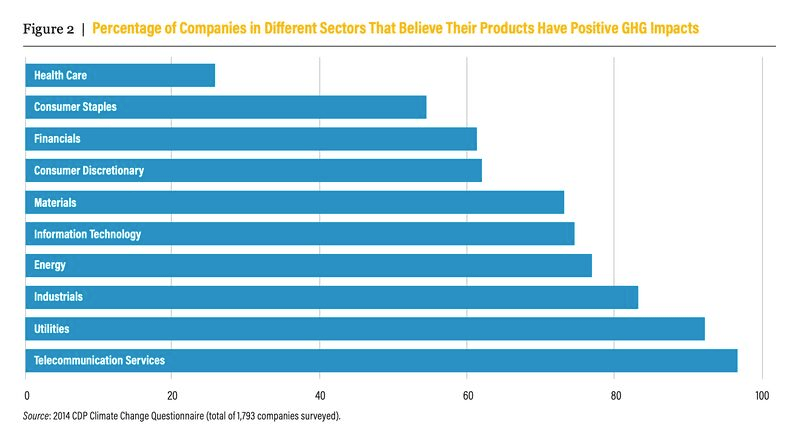
Japanese conglomerates like Panasonic, Hitachi, Daikin and other Japanese businesses have been at the forefront of a government-backed campaign to adopt a new metric to assess a company’s efforts towards achieving carbon neutrality goals. This metric is avoided emissions, sometimes called scope 4 emissions. It is based on the idea that investors should look beyond a company’s efforts to reduce greenhouse gas (GHG) emissions in its own operations and supply chains to consider the contributions made to society and the economy by its energy-saving products and services.

So, what do avoided emissions mean? Avoided emissions refer to reducing greenhouse gas emissions that occur outside of a product’s life cycle or value chain but as a result of using that product. Thus, using an electric vehicle helps reduce carbon emissions even though the product itself may have high scope 1 and 2 emissions. The emissions avoided by the use of the product are currently not considered.

Thus, companies like Tesla are ranked low on emissions even though they help reduce emissions by enabling people to shift from petrol. Other examples of avoided emissions include such products and services include low-temperature detergents, fuel-saving tires, energy-efficient ball-bearings, teleconferencing services, manufacturing a catalyst to improve production efficiency, providing services enabling energy savings, selling digital technologies that reduce the need for business travel, and using clean-burning fuel and avoiding idling to cut carbon emissions.

How can avoided emissions be measured? A simple approach is to measure the difference between the total life-cycle GHG inventories of a company’s product (the “assessed” product) and an alternative (or “reference”) product that provides an equivalent function. Then the

Comparative GHG Impact = Life-Cycle Emissions of Reference Product – Life-Cycle Emissions of Assessed Product

Here the reference product may be a petrol vehicle, and the assessed product is the electric vehicle. If the comparative impact is positive, then the petrol vehicle emissions are higher than that of electric vehicles, and there is avoided emission. The key challenge here is finding a comparable reference product.

There is a strong case for measuring avoided emissions. It can bring a competitive advantage by showing that a product is environmentally friendly. It also increases the level of transparency in its non-financial disclosures. By providing goods and services with low carbon emissions the company supports decarbonising efforts. Once a standardised measurement method is made available, it will be easy to compare products and services.

Image: from Estimating And Reporting The Comparative Emissions Impacts Of Products, World Resources Institute Working paper

Climate Risk and Banks’ Credit Losses

Banks face two kinds of risks – risk from physical events and risk from transition to a net zero economy. A recent report in Bloomberg raises an important question about the time frame in which losses from loans made to high-carbon industries that contribute the most to global warming may become financially material for the bank. Take the case of Standard Chartered Bank, which has committed to reaching net zero carbon emissions from its operations by 2025 and from our financing by 2050. The bank’s head of carbon accounting and net-zero delivery believes that climate risks won’t hit the bank’s loans until 2030 to 2035. The analysis is based on the bank’s assessment of expected credit losses when considering the financial impacts of 1.5ºC climate scenarios. In its 2022 annual report, the bank estimated credit-related losses at $603 million based on a materiality threshold of 0.4% of its equity.

It is important to understand where in the climate change scenario credit risks for a bank come from. These are:

Physical risks: These arise from damage to property, infrastructure, and land due to climate shocks, such as hurricanes, floods, and wildfires.

Transition risks: These result from changes in climate policy, technology, and consumer and market sentiment while adjusting to a lower-carbon economy. Banks can be exposed to transition risks through their financing portfolios, as many carbon-intensive activities may become unprofitable or even stranded assets in a low-carbon economy.

Sectoral risks: Climate change has differential impacts on each sector of the economy, and banks should adopt a sectoral approach to analysing climate risk in their credit portfolios.

Default risk: Climate risks can lead to increased default risk of loan portfolios or lower values of assets.

Reputational risks: Banks that are perceived as not taking climate change seriously may face reputational risks, which can lead to a loss of customers and investors.

While these risks are relevant, the extent of the risk depends on the extent of the climate impact. HSBC depicts the impact of various climate pathways on credit losses for its customers and portfolios. The image below is a great representation of the risks faced by a bank and the different climate pathways that it can follow. It is imperative that banks look closely at the impact of climate change on their portfolios and assets.

Blended Finance: Unlocking Commercial Finance forSustainable Development

Here is my piece on Blended Finance, published in Artha, the IIM Calcutta finance journal. With investment needs to move to a green economy exceeding $1 trillion a year by 2030, governments and international agencies will find it challenging to fund this. Thus private and public finance will need to join hands. Blended finance blends concessional and market-based finance to fund social and climate needs. I explore the role of blended finance in this article.

Financed Emissions

Banks play a dual role. At one end, they finance decarbonisation; at the other, they finance emissions through loans and investments. Thus, financed emissions are the greenhouse gas (GHG) emissions linked to the investment and lending activities of financial institutions like investment managers, banks and insurers. It’s the carbon footprint of a firm’s investments or loans. There are also facilitated emissions that promote GHG emissions through off-balance-sheet financing activities like underwriting, securitisation and advisory services.

The measurement of financed emissions is a fast-moving area and gets accounted for under Scope 3 category 15 of the Greenhouse Gas Protocol. Only a few of the global banks report financed emissions. Even where they do, measurement methodologies and disclosures vary significantly. 131 banks have committed to reducing their financed emissions and joined the Net Zero Banking Alliance. This is a small fraction of the estimated 25,000 banks worldwide. However, it accounts for 40% of global banking assets.

At heart, the accounting for financed emissions is straightforward. Take the case of a bank with only two bonds of equal amounts in its loan portfolio of power utilities. Bond 1 is from a company that produces 2 kg CO2e per kilowatt hour. Bond 2, on the other hand, produces 1 kg  CO2e per kilowatt hour. As a result, the bank has financed 1.5 kg ([2+1]/2) CO2e of emissions. For the bank to meet SBTi targets, the emissions within the loan portfolio should decline to 0.75 kg CO2e.

 In practice, assessing and setting targets for financed emissions is not simple. It involves multiple complexities arising from differences between sectors, geographic variation, shifting counterparty plans, changing industry standards, and a nascent and rapidly evolving data environment.

Financed emissions pose a significant risk to financial institutions. They pose a reputational risk from stakeholders who take climate issues seriously. Climate-related regulatory changes may impact the profitability of invested companies and pose a credit risk. Banks that finance carbon-emitting businesses may face financial risk if those businesses are held liable for environmental damage or face penalties for non-compliance with environmental regulations.

Financial institutions need to address and manage the risks posed by financed emissions. Regulatory and governance oversight is critical to ensure banks earn a fair risk-adjusted return while managing climate-related risks.